Understanding collagen
Collagen is essential for active living and healthy ageing, particularly mobility and beauty-from-within. Yet there are many forms of collagen, and not all are equal.

Essential protein
Collagen is the major protein of animal connective tissues and does not occur naturally in plants. It is characterized by its high hydroxyproline content, a collagen-specific amino acid, and the presence of glycine, another amino acid, every three amino acids in its protein sequence. Collagen is the main structural protein of our body, essential to the skin, bones, tendons and cartilage, but our endogenous collagen production declines with age. Supplementation with collagen ingredients, conventionally extracted from animal tissues, primarily bovine, poultry and marine sources, may help maintain collagen levels.
Bioactive peptides
Hydroxyproline plays a key role in the biological properties of collagen ingredients, in supporting skin and joint health and, more broadly, active living, healthy ageing and longevity. To improve bioavailability, collagen can be hydrolyzed into peptides. However, only certain peptides are truly bioactive, particularly di- and tripeptides containing hydroxyproline, such as GPO, one of its most documented bioactive forms, whereas free hydroxyproline is generally not considered bioactive.
Essential but intrinsically limited
For decades, people have relied on animal-derived collagen peptides. Despite some innovations and improvements, this approach is increasingly showing its limitations.
Limited efficacy
Animal-derived collagen contains only low levels of bioactive tripeptide sequences, generally resulting in less than 1% GPO in conventional collagen peptides.
Massive doses
To achieve results, consumers need to take inconvenient doses of up to 20 g per day, equivalent to 2 or 3 spoonfuls.
Multiple concerns
Extraction from animal tissues raises ethical, environmental and safety concerns.

Failing alternatives
Vegan alternatives and first-generation recombinant collagens lack the essential hydroxyproline-containing tripeptides required for true bioactivity.
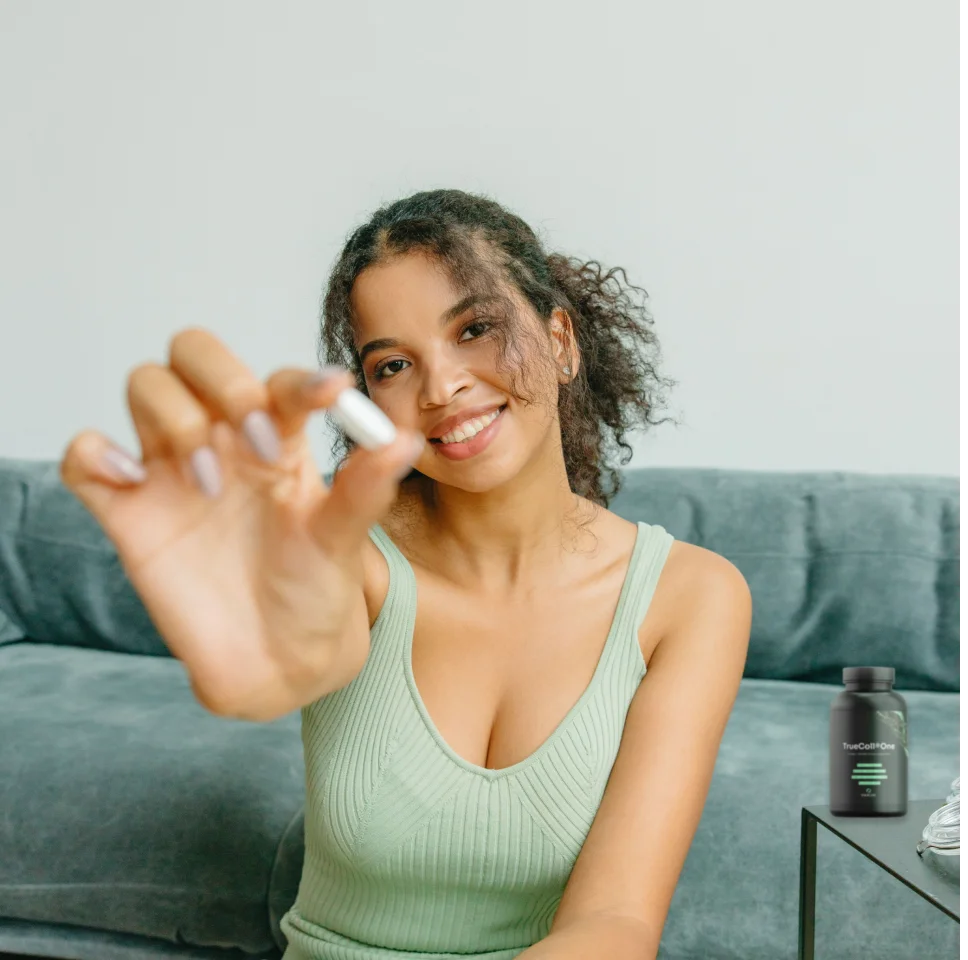
TrueColl® One addresses all the challenges of conventional collagen peptides.
Made through precision fermentation, TrueColl One contains only highly bioactive di- and tripeptides, with over 50% GPO, and is animal-free.

FAQ
More about collagen and collagen peptides.
Which health benefits do collagen peptides support?
Through dietary supplements and functional foods, collagen peptides are designed to support multiple health benefits, in particular beauty-from-within (skin health), mobility (joint health) and sports activities, and more broadly active living and healthy ageing (longevity).
What is the GPO tripeptide?
GPO is a tripeptide composed of three amino acids, glycine (G), proline (P) and hydroxyproline (O). It is highly bioavailable, with good resistance to digestion and efficient absorption into the bloodstream, especially through peptide transporters such as PEPT1. GPO is among the most documented bioactive collagen tripeptides, one of the main active forms of hydroxyproline, and also a precursor of the highly bioactive dipeptides PO and OG. Animal collagen contains only low levels of GPO sequences, generally resulting in less than 1% GPO in conventional collagen peptides.
How do collagen peptides work?
After ingestion, collagen peptides are further digested and hydrolyzed, and are partially absorbed into the bloodstream. They reach target tissues, where they act as biological signals, i.e. they stimulate specific cellular responses. In particular, bioactive di- and tripeptides containing hydroxyproline, such as GPO, can stimulate cells involved in collagen production, including skin fibroblasts and joint chondrocytes, helping support collagen synthesis and tissue maintenance. However, their exact mechanisms of action remain unclear and involve multiple biological pathways.
Are marine collagen peptides different and more efficient than others?
Collagen peptides have conventionally been extracted from animal tissues, primarily bovine, porcine, poultry and, more recently, marine (fish) sources.
However, these origins are not necessarily associated with specific peptide compositions or superior efficacy. They mainly reflect specific market demands, specifically regarding ethical considerations and perceived food safety. For example, bovine collagen is particularly popular in the United States, while marine collagen is often preferred in France and Europe.
What are the side effects associated with collagen peptides ?
The high daily doses required for conventional collagen peptides can create significant inconveniences for consumers. They are typically consumed as powders dissolved in drinks or incorporated into functional foods, or as multiple large capsules.
These doses can be difficult to take over time, affecting regular consumption and ultimately product effectiveness. At such doses, collagen peptides often have an unpleasant taste that can become tiresome for consumers, as can the strong flavorings sometimes used to mask it. Digestive discomfort, such as bloating and nausea, is also sometimes reported. In addition, collagen peptides derived from fish are allergens.
To overcome these challenges, some manufacturers use lower doses of collagen peptides in supplements or functional foods, however resulting in reduced effectiveness.
What are recombinant collagen peptides?
Recombinant collagen peptides are produced using genetically engineered cells, primarily through precision fermentation for food applications, whereas other applications may use mammalian cells.
Today, only a few companies are active in the food ingredient market, compared with a larger number in cosmetic and medical applications.
These first-generation recombinant collagen ingredients lack hydroxyproline and therefore do not contain bioactive tripeptides such as GPO. This limits their potential efficacy and requires high daily doses.These doses can be difficult to take over time, affecting regular consumption and ultimately product effectiveness. At such doses, collagen peptides often have an unpleasant taste that can become tiresome for consumers, as can the strong flavorings sometimes used to mask it. Digestive discomfort, such as bloating and nausea, is also sometimes reported. In addition, collagen peptides derived from fish are allergens.
To overcome these challenges, some manufacturers use lower doses of collagen peptides in supplements or functional foods, however resulting in reduced effectiveness.
What are the vegan alternatives to collagen peptides ?
Vegan collagen alternatives are primarily plant protein hydrolysates, which are not collagen peptides as they lack hydroxyproline and glycine every three amino acids, and therefore do not contain highly bioactive tripeptides such as GPO.
Their mechanisms of action differ from those of conventional collagen peptides. They mainly provide proteins and amino acids for nutritional purposes, with limited stimulation of specific cellular responses. Their efficacy on collagen-related health benefits remains limited, and they require high daily doses. Other alternatives include collagen boosters, such as vitamin C, zinc, copper and polyphenols, which may support endogenous collagen production or help limit its degradation through different mechanisms. Combining them with collagen peptides could offer broader benefits, but the high daily doses required for conventional collagen peptides make such combinations challenging.
Go beyond traditional collagen limits. Reinvent collagen.
Overcome limited efficacy, high daily doses, side effects and animal-derived concerns. Discover how TrueColl® One can deliver a superior consumer experience and help your brand create the impossible.